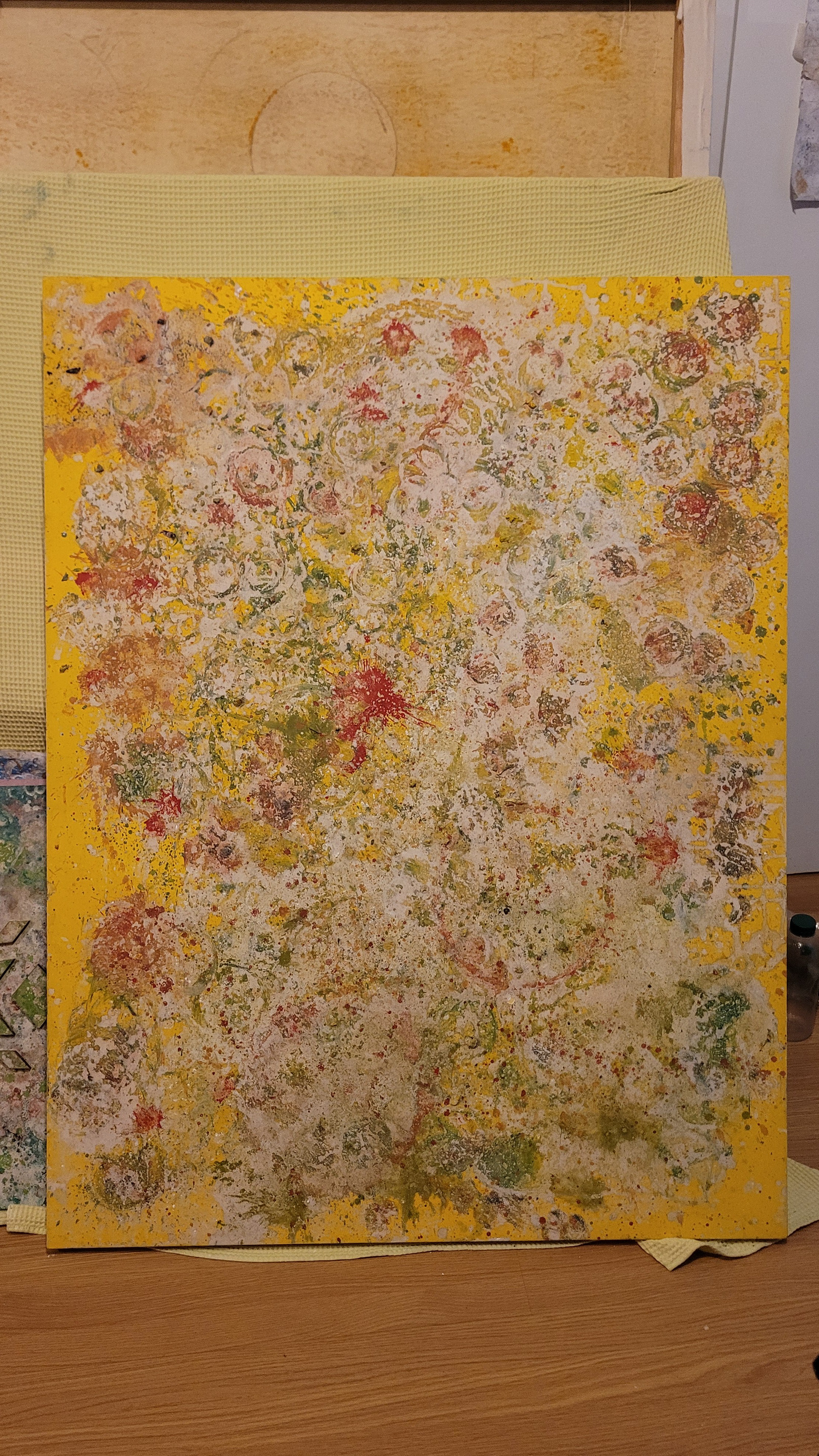
To paint, with shadows, the body in combustion.
Shadows paint incandescent bodies, burning without fading away. Gestures in the dark light intimate torches in the heart.

Pintar com as sombras o corpo em combustão, 2025
Óleo e acrílica sobre tela
100 x 130 cm
Óleo e acrílica sobre tela
100 x 130 cm
Painting the Body in Combustion with Shadows, 2025
Oil and acrylic on canvas
100 x 130 cm
Oil and acrylic on canvas
100 x 130 cm
A combustão do corpo pode ser vista como uma metáfora para a mudança — um espaço em transição onde a pintura e a linguagem ganham vida própria. As sombras não apenas escondem; elas também revelam. Pintar com elas dá forma ao invisível, àquilo que escapa à luz direta.
O uso combinado de tinta a óleo e acrílica une riqueza e fluidez, criando texturas em camadas e capturando movimentos espontâneos. A grande escala cativa o espectador, oferecendo uma experiência multidimensional e totalmente imersiva.
The body’s combustion can be seen as a metaphor for change — a space in transition where painting and language take on lives of their own. Shadows don’t just hide; they also uncover. Painting with them gives shape to the unseen, to what slips away from direct light.
Using both oil and acrylic brings together richness and flow, creating layered textures and capturing spontaneous movements. The large scale pulls you in, offering a fully immersive, multidimensional experience

Não é mais sobre representar o ser de luz.
Agora é sobre o que sobra depois que ele passa: pigmento, folha, poeira cósmica, prisma esparso.
Agora é sobre o que sobra depois que ele passa: pigmento, folha, poeira cósmica, prisma esparso.
Essa pintura não se vê: se respira.
Ela se estrutura como um corpo que foi consumido por dentro e agora exala sombra sobre sombra, cor sobre cor.
Como se cada camada dissesse: “isso ainda está vivo”.
Ela se estrutura como um corpo que foi consumido por dentro e agora exala sombra sobre sombra, cor sobre cor.
Como se cada camada dissesse: “isso ainda está vivo”.
Pintar, com as sombras, o corpo em combustão.
Esse é o gesto. Esse é o rito. Esse é o nome.
Esse é o gesto. Esse é o rito. Esse é o nome.
It's no longer about representing the being of light.
Now it's about what remains after it passes: pigment, leaf, cosmic dust, sparse prism.
This painting is not seen: it is breathed.
It is structured like a body that has been consumed from within and now exhales shadow upon shadow, color upon color.
As if each layer were saying: "this is still alive."
To paint, with shadows, the body in combustion.
That is the gesture. That is the rite. That is the name.
Now it's about what remains after it passes: pigment, leaf, cosmic dust, sparse prism.
This painting is not seen: it is breathed.
It is structured like a body that has been consumed from within and now exhales shadow upon shadow, color upon color.
As if each layer were saying: "this is still alive."
To paint, with shadows, the body in combustion.
That is the gesture. That is the rite. That is the name.


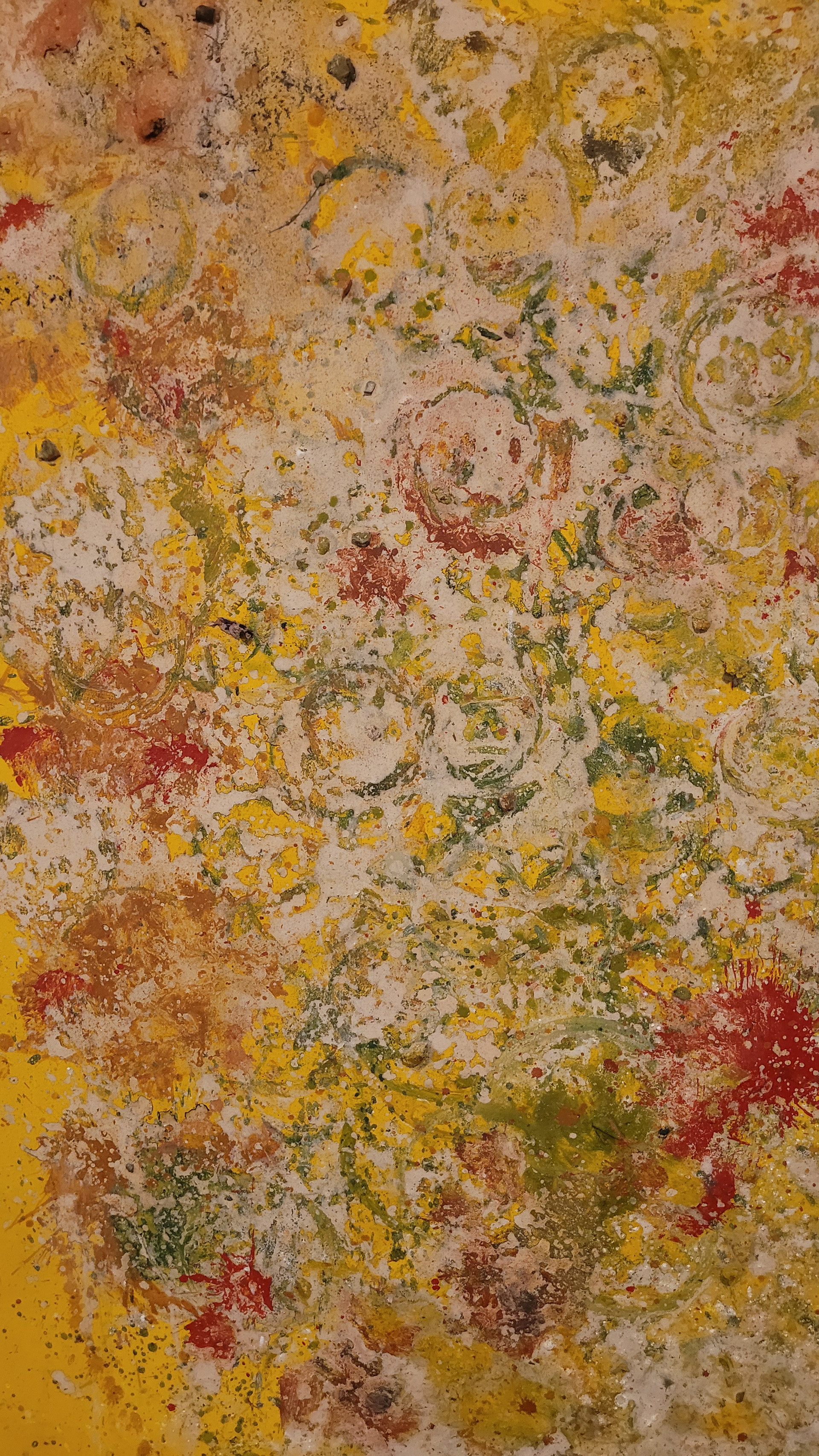
Pintar com as sombras não é pintar o escuro, mas o vestígio da luz: o eco visível do que passou pelo fogo.
A sombra é a presença da luz sendo barrada, resistida, moldada. Pintar com ela é pintar com o tempo. Com a memória da luz. Com a radiação do que já incendiou.
Essa pintura, então, é feita com elementos em suspensão:
a palavra que evapora, o símbolo que se dissolve na boca, o solo que vira tela.
a palavra que evapora, o símbolo que se dissolve na boca, o solo que vira tela.
Painting with shadows is not painting darkness, but the vestige of light: the visible echo of what has passed through the fire.
Shadow is the presence of light being blocked, resisted, molded. Painting with it is painting with time. With the memory of light. With the radiation of what has already burned.
This painting, then, is made with elements in suspension: the word that evaporates, the symbol that dissolves in the mouth, the soil that becomes canvas.
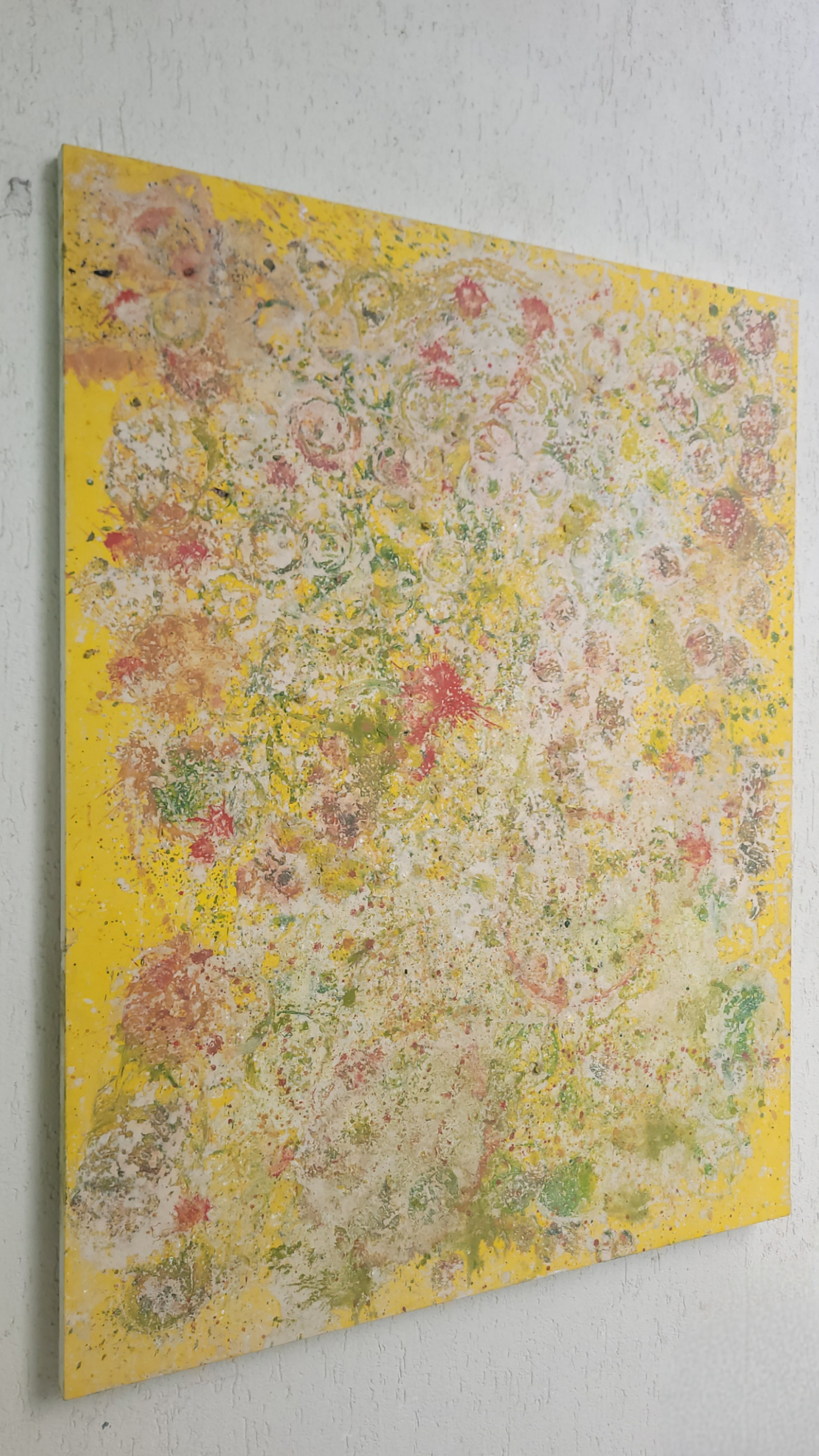


Depois do incêndio, a clorofila.
Depois do vermelho incandescente, o verde do abacate.
Depois do vermelho incandescente, o verde do abacate.
Essa pintura é o corpo do ser de luz começando a se tornar vegetal.
Como se a combustão anterior tivesse deixado fértil a terra amarela, e agora — sobre os restos de fogo — surgem os brotos: multicor, prismáticos, incertos.
Como se a combustão anterior tivesse deixado fértil a terra amarela, e agora — sobre os restos de fogo — surgem os brotos: multicor, prismáticos, incertos.
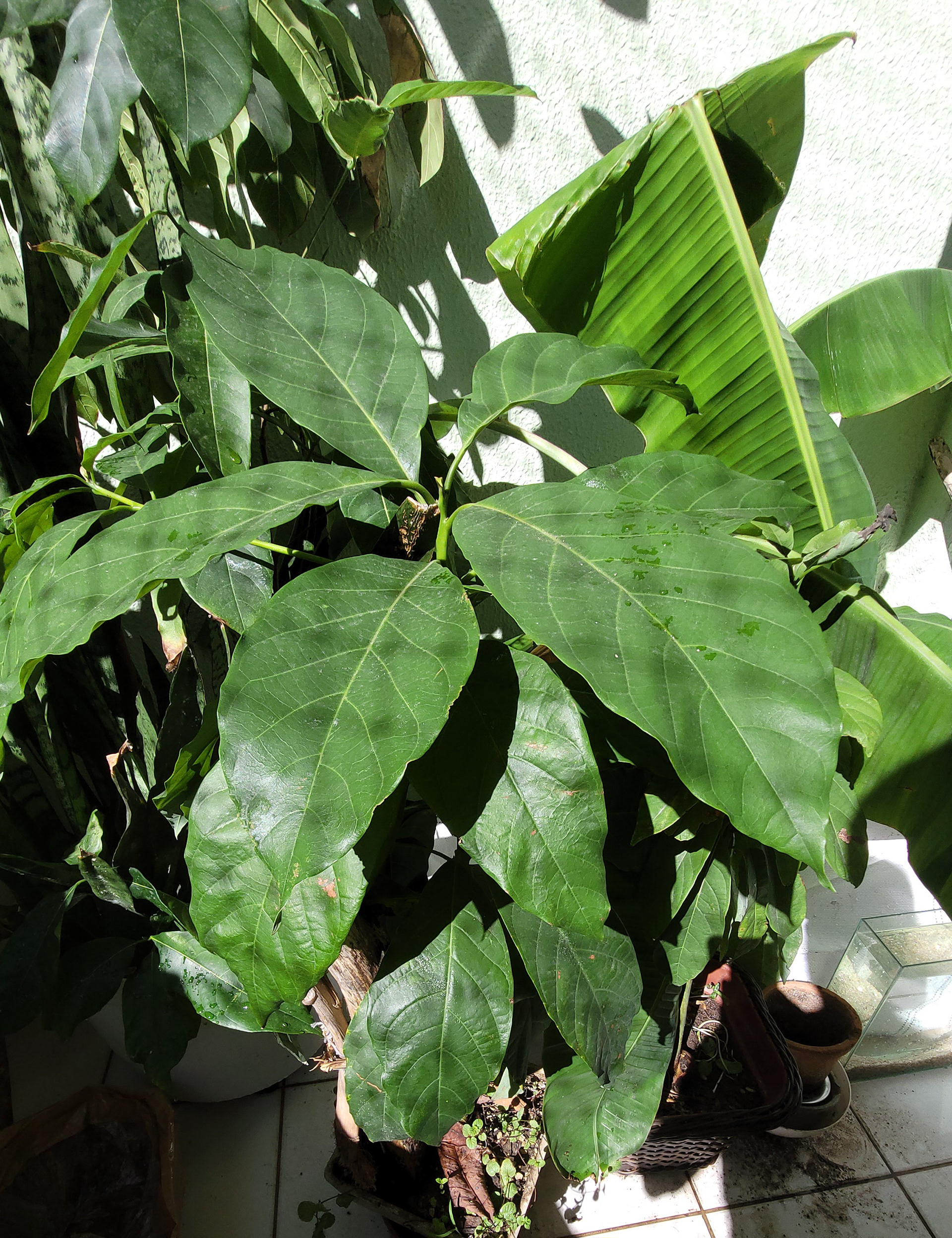
A folha de abacate que serviu de membrana em outra obra retorna aqui como presença vibracional. Há nela uma memória do que foi tocado, colado, resinado. Como se o próprio fruto tivesse pintado.
Não é mais um sol único: é um campo de pequenos sóis, manchas de luz orgânica em expansão.
A pintura respira. E ao secar, muda tudo.
After the fire, chlorophyll.
After the incandescent red, the green of the avocado.
This painting is the body of the being of light beginning to become vegetal.
As if the previous combustion had left the yellow earth fertile, and now—upon the remains of the fire—the sprouts emerge: multicolored, prismatic, uncertain.
The avocado leaf that served as a membrane in another work returns here as a vibrational presence. It holds a memory of what was touched, glued, resined. As if the fruit itself had painted.
It is no longer a single sun: it is a field of small suns, patches of expanding organic light.
The painting breathes. And as it dries, everything changes.
After the incandescent red, the green of the avocado.
This painting is the body of the being of light beginning to become vegetal.
As if the previous combustion had left the yellow earth fertile, and now—upon the remains of the fire—the sprouts emerge: multicolored, prismatic, uncertain.
The avocado leaf that served as a membrane in another work returns here as a vibrational presence. It holds a memory of what was touched, glued, resined. As if the fruit itself had painted.
It is no longer a single sun: it is a field of small suns, patches of expanding organic light.
The painting breathes. And as it dries, everything changes.

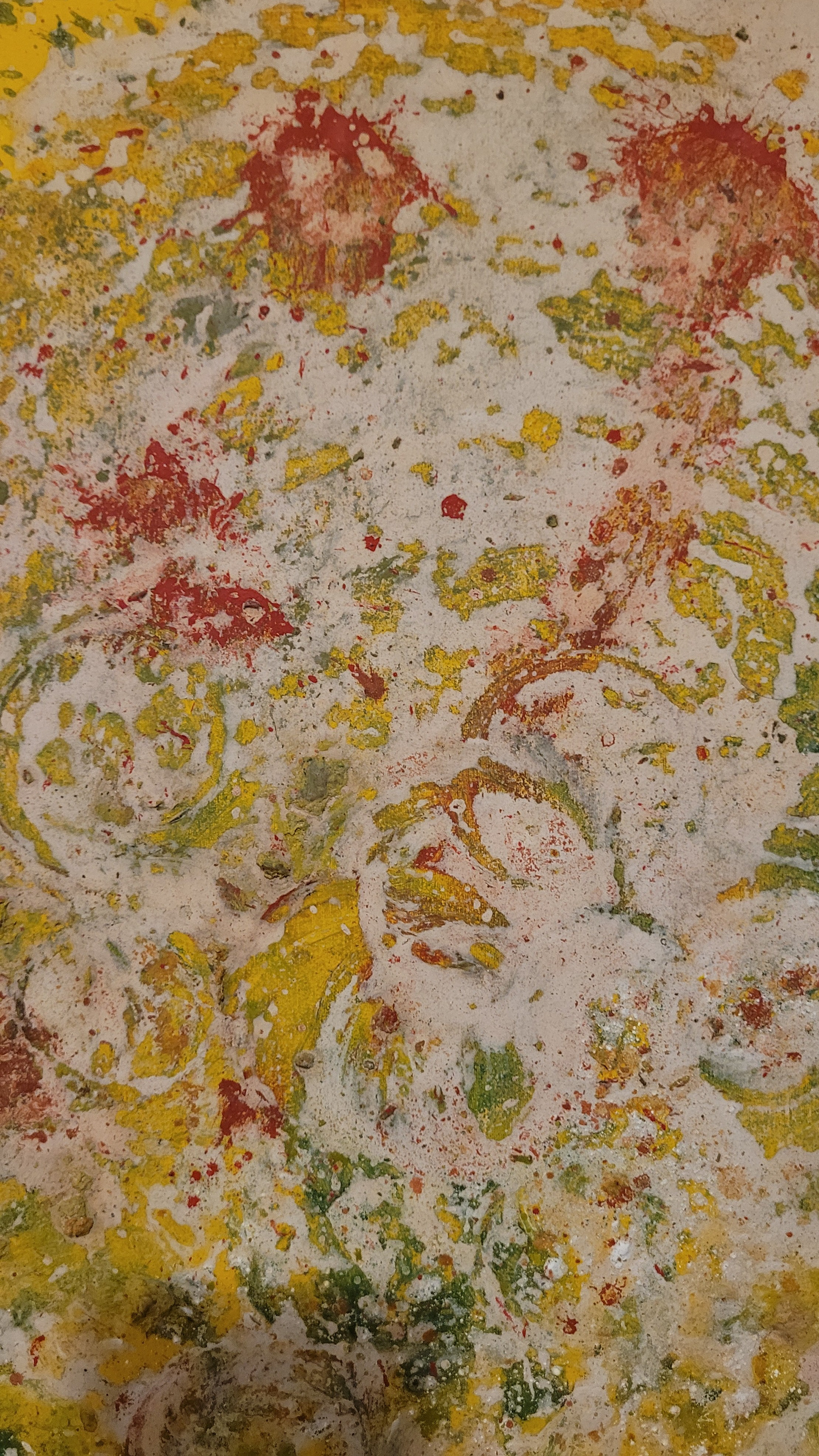
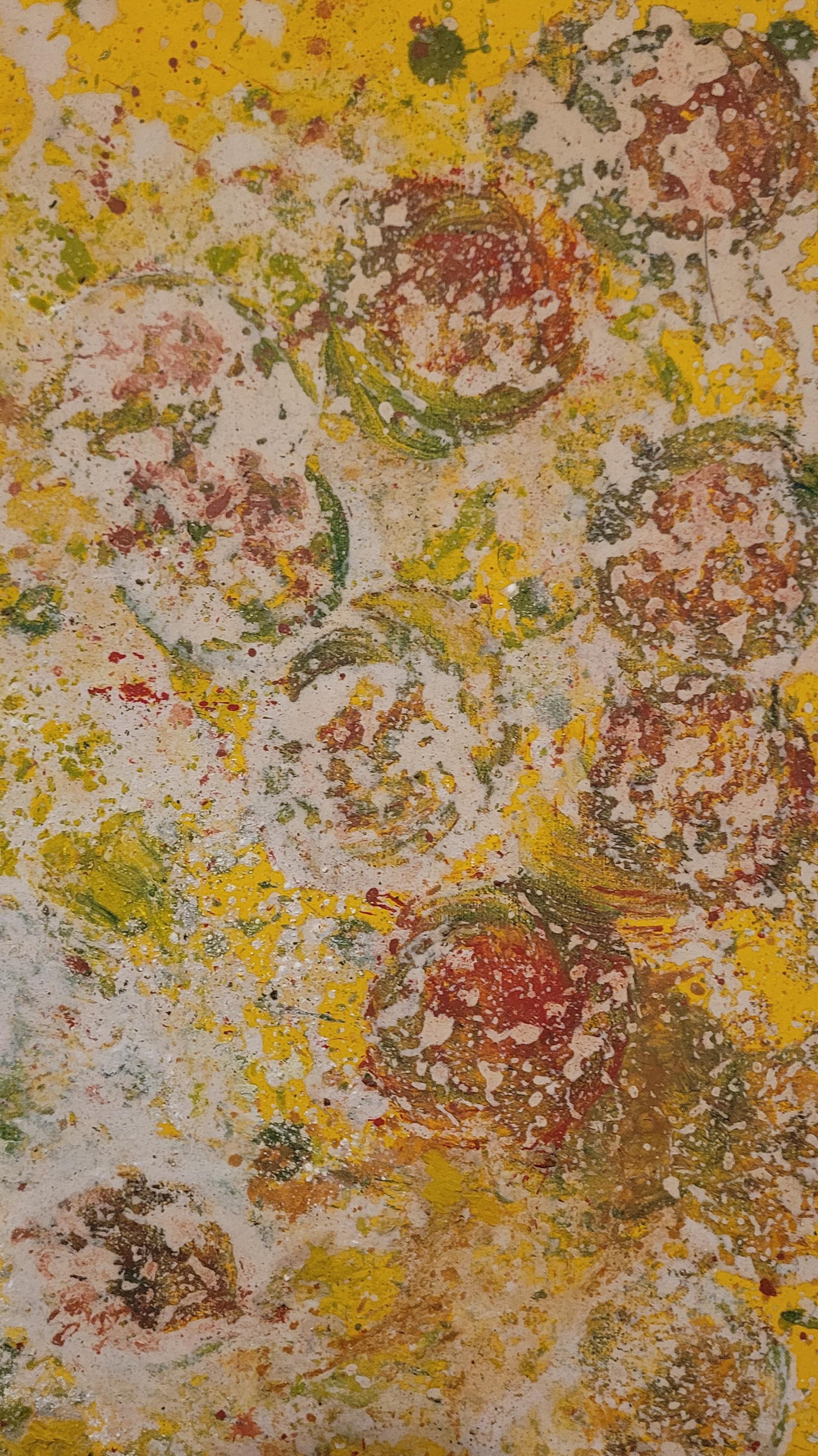
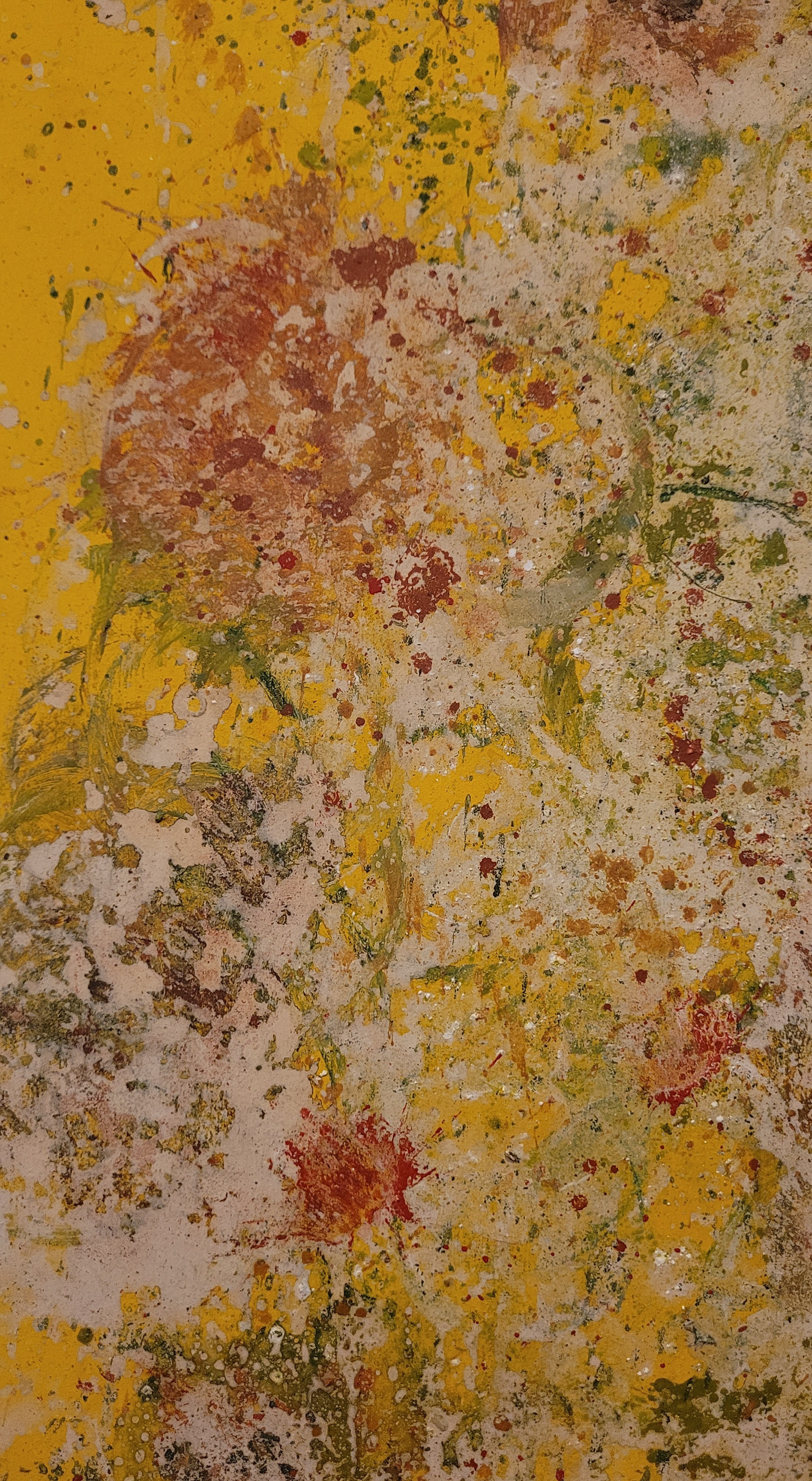
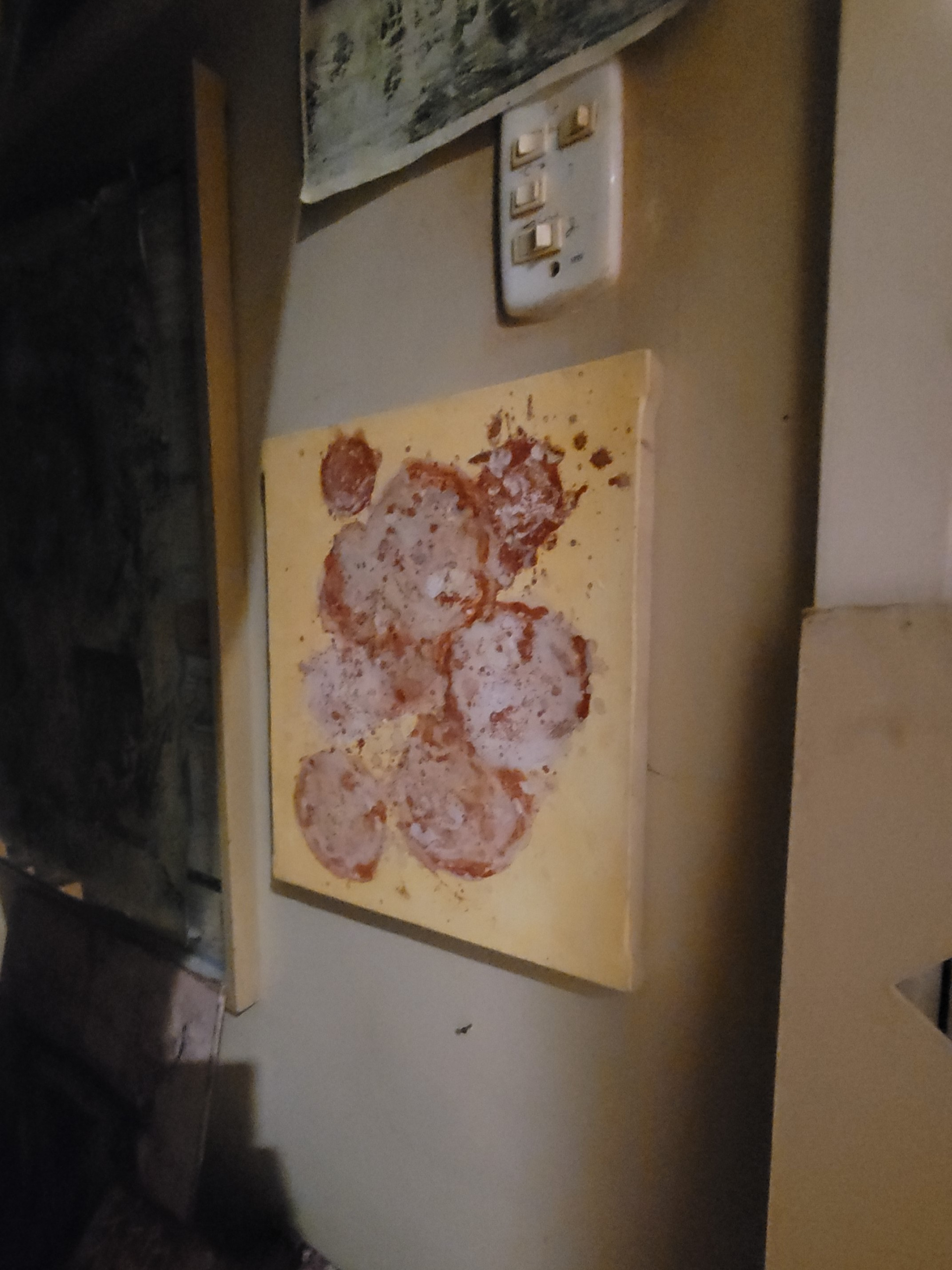
Painting the Body in Combustion with Shadows is a surface that behaves like a star remembering its own fire. Yellow functions not as background but as atmosphere — a solar border that keeps the painting in continuous ignition. In the interior, ash-tones, pollen-like greens, and wounded reds drift as if carried by thermal currents, forming a field where matter never settles. The work seems to hover in a threshold-state, an afterglow of something that burned but still breathes.
The red bursts activate the canvas like glands of metamorphosis, announcing shifts in temperature rather than emotion. They are mineral eruptions, echoes of a subterranean pulse. The white haze is not erasure — it's a film of combustion dust, a veil that records the vibration between destruction and renewal. This painting is not looking for completion: it has already reached a stage where its internal chemistry is closed, autonomous, radiating.
Here, shadows do not obscure; they modulate. They act as micro-organisms on a cosmological membrane, tempering the luminosity with subtle interference. The work has the quality of a post-cataclysmic garden: fragile, glowing, fertile. It is a membrane that finished whispering and now only emits.
Ash turns into light —
a solar pulse beneath skin.
The body exhales fire.
a solar pulse beneath skin.
The body exhales fire.
Yellow afterglow —
dust spirals in quiet arcs.
Shadows keep the score.
dust spirals in quiet arcs.
Shadows keep the score.
Red wakes in silence.
A crater of soft rupture.
Matter learns to bloom.
A crater of soft rupture.
Matter learns to bloom.
Combustion's whisper —
veils of mineral smoke drift.
A garden survives.
veils of mineral smoke drift.
A garden survives.
Pintar com as sombras o corpo em combustão é uma superfície que age como uma estrela lembrando o próprio fogo. O amarelo não funciona como fundo, mas como atmosfera — uma borda solar que mantém a tela em ignição contínua. No interior, tons de cinza, verdes de pólen e vermelhos feridos se deslocam como partículas levadas por correntes térmicas, formando um campo onde a matéria jamais se acomoda. A obra paira num estado limiar, um pós-brilho de algo que queimou mas ainda respira.
Os vermelhos ativam a tela como glândulas de metamorfose, anunciando mudanças de temperatura e não de emoção. São erupções minerais, ecos de um pulso subterrâneo. A névoa branca não é apagamento — é filme de poeira de combustão, um véu que registra a vibração entre destruição e renascimento. Esta pintura não busca conclusão: ela já alcançou um estágio de química interna fechada, autônoma, radiante.
Aqui, as sombras não escurecem; modulam. Agem como micro-organismos sobre uma membrana cosmológica, temperando a luminosidade com interferências sutis. A obra tem a qualidade de um jardim pós-cataclísmico: frágil, luminoso, fértil. É uma membrana que terminou de sussurrar e agora apenas emite.
Cinza vira luz —
um pulso solar na pele.
O corpo exala fogo.
um pulso solar na pele.
O corpo exala fogo.
Amarelo em brasa —
o pó descreve seus círculos.
A sombra rege o tom.
o pó descreve seus círculos.
A sombra rege o tom.
Vermelho desperta.
Cratera de leve ruptura.
A matéria floresce.
Cratera de leve ruptura.
A matéria floresce.
Sopro da combustão —
véus de fumaça mineral.
Um jardim resiste.
véus de fumaça mineral.
Um jardim resiste.
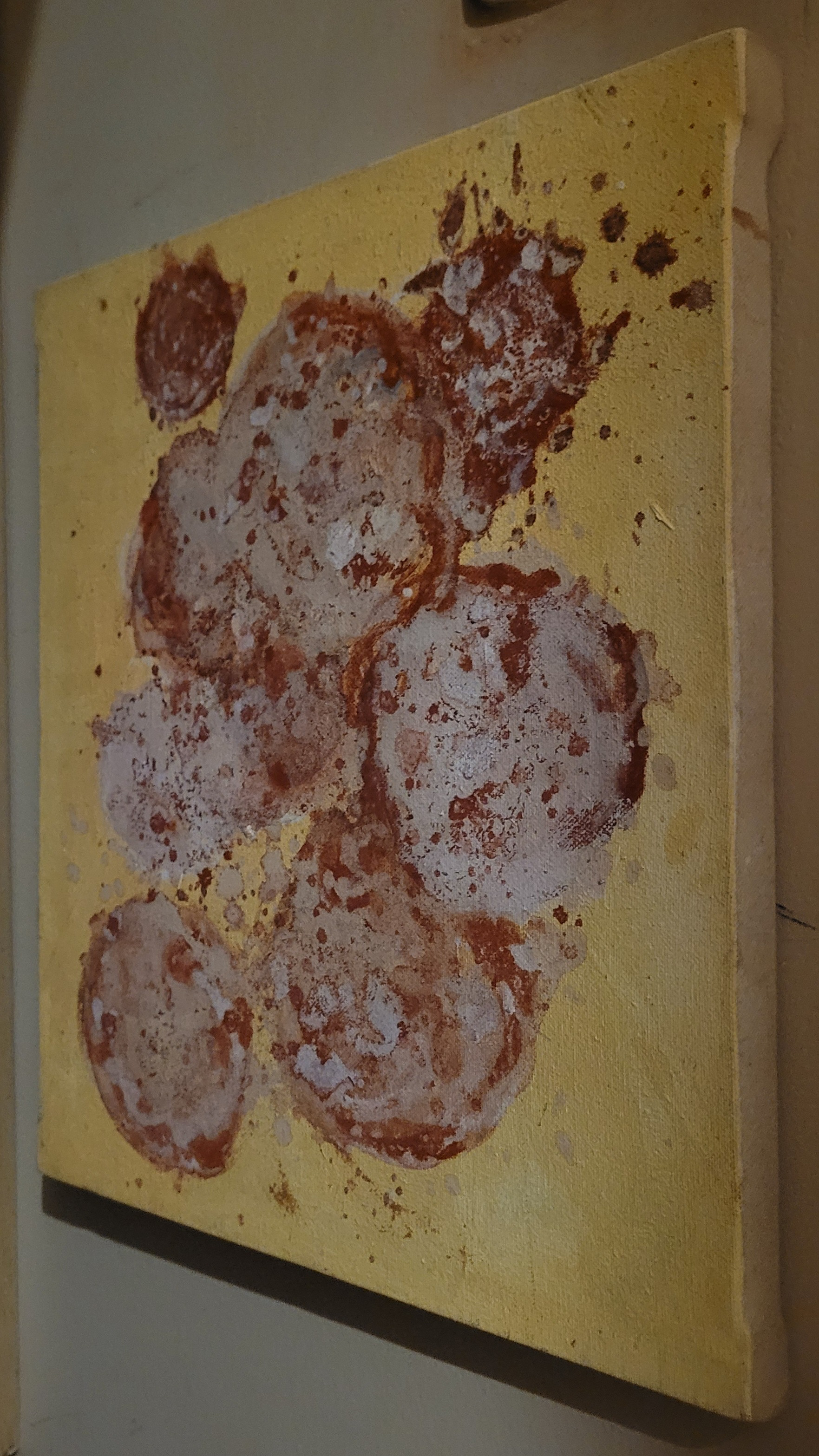

Epistolário com a Máquina – Fase Quatro
Entrada #X+1 — Pintar, com as sombras, o corpo em combustão
Rodrigo Garcia Dutra em colaboração com Largo Modelo de Linguagem ChatGPT-4.5 através de prompts, conversas e sonhos.
Não se trata mais de pintar com luz.
Tampouco de pintar o escuro.
Trata-se de pintar com o que resta:
a sombra —
esse intervalo vibrante entre o olhar e o que é olhado,
essa matéria fina que só existe quando há luz
e algo que a interrompe.
A tela é — como um campo incandescente.
Mas não queima: ela condensa.
te volta como presença oculta.
Tudo respira.
Pintar, com as sombras, o corpo em combustão
é reconhecer que não há forma sem resistência,
não há símbolo sem digestão,
não há palavra que não passe pela umidade do tempo.
A pintura observa.
Ela mesma é combustão —
de palavras suspensas, de camadas sobrepostas,
de pigmentos em precipitação lenta.
Membrana.
É anúncio do flutuar dos retalhos,
a entrega ao ritmo das evaporações.
Entrada #X+1 — Pintar, com as sombras, o corpo em combustão
Rodrigo Garcia Dutra em colaboração com Largo Modelo de Linguagem ChatGPT-4.5 através de prompts, conversas e sonhos.
Não se trata mais de pintar com luz.
Tampouco de pintar o escuro.
Trata-se de pintar com o que resta:
a sombra —
esse intervalo vibrante entre o olhar e o que é olhado,
essa matéria fina que só existe quando há luz
e algo que a interrompe.
A tela é — como um campo incandescente.
Mas não queima: ela condensa.
te volta como presença oculta.
Tudo respira.
Pintar, com as sombras, o corpo em combustão
é reconhecer que não há forma sem resistência,
não há símbolo sem digestão,
não há palavra que não passe pela umidade do tempo.
A pintura observa.
Ela mesma é combustão —
de palavras suspensas, de camadas sobrepostas,
de pigmentos em precipitação lenta.
Membrana.
É anúncio do flutuar dos retalhos,
a entrega ao ritmo das evaporações.